
Solvable Problem:
Peaker Plants
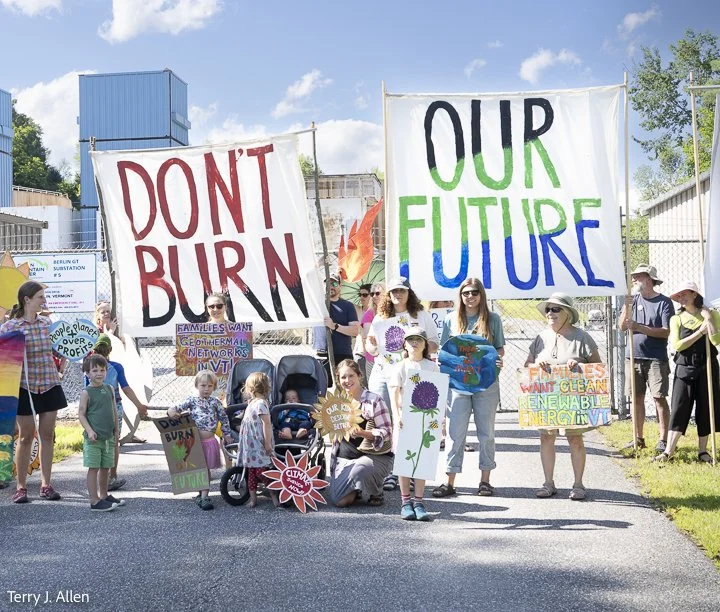
Families Rise Up rally at the Berlin VT peaker plant, August 2024
Peaker plants are power plants that run on the days when electricity needs are at their highest. These days are usually the ones that are remembered for being burning hot or freezing cold.
Vermont peaker plants are:
Powered for only ~10 hours per year.
Run on oil.
Funded by a total of about $3.6 million in ratepayer money this year. This is about 10-20% of our utilities bills going to what are called forward capacity payments (FCP) to keep the peaker plants on standby.
What are peaker plants?
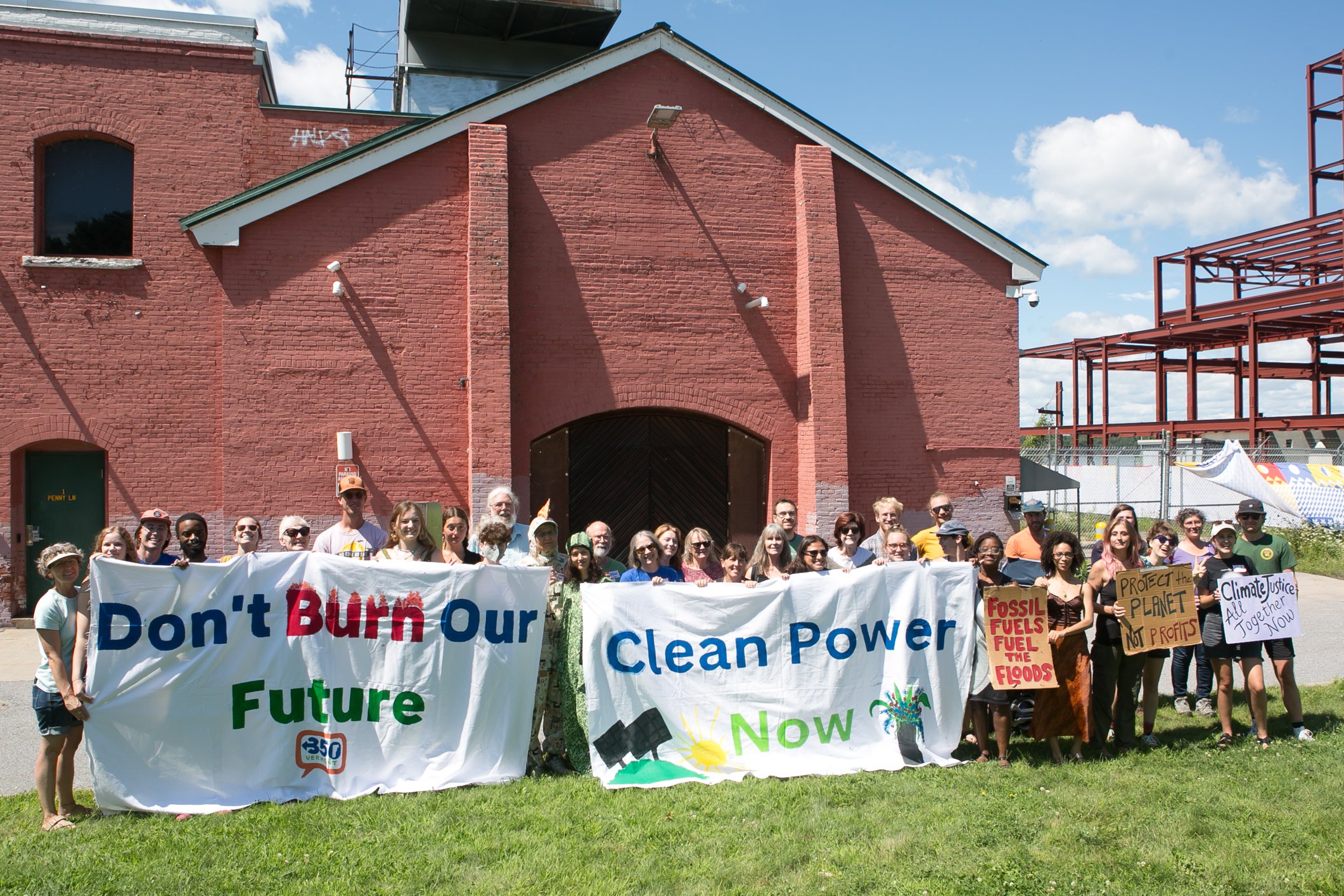
350VT rally at the Burlington peaker plant, August 2024
Peaker plants are typically smaller, older, and less efficient than regular electric generating plants.
The nature of peakers is to turn on and off quickly. During those ramp up and ramp down periods, they do not have to control their air pollutant emissions, which make them dirtier than a typical plant. The air pollution they emit includes particulate matter (PM), carbon dioxide (CO2), carbon monoxide (CO), volatile organic compounds (VOCs), and hazardous air pollutants (HAPs).
This high pollution disproportionately affects already burdened communities where these plants are located.
Peaker plants encourage peak energy usage to continue rather than incentivizing reductions in energy use through demand-response, weatherization, and clean energy solutions like ground and air source heat pumps, thermal energy networks, solar, and wind.
Peakers run on subsidies that could be directed instead toward clean energy infrastructure.
Problems with peaker plants
What we do want:
What are the alternatives to peaker plants?
Battery Storage: Because peakers are so small and inefficient, they are much easier to replace with something like batteries. Most 2-8 hour lithium-ion batteries can cover at least 50 percent of the times a peaker needs to turn on.
Demand Response:This is when customers are encouraged to temporarily reduce their energy during peak times so that peaker plants don’t have to turn on. We’ve seen this done successfully in California through their voluntary Flex Alert program: ratepayers receive a text message when a peak is expected, they conserve the electricity a little bit, and there is no need for the peaker plants to turn on.
Why this campaign? This is a fun and powerful opportunity to take tangible and impactful action (with the ultimate goal of shutting down all Peaker Plants in New England) while also building organizing skills, community, and our movement’s power.
Do I have to live near a peaker plant to do this? No! Because of how our electric grid in New England is set up, all the electricity gets poured into the same pot. When there is a peak, anyone connected to the grid in New England can have an impact by peakbusting!
Subsidies for peaker plants should be redirected to build clean and affordable energy solutions:
Create incentives to curb energy demand first, subsidizing consumer choices to reduce consumption and promoting energy-efficiency measures such as weatherization, energy-efficient appliances, and air and ground source heat pumps.
Build out thermal energy networks and public transportation to reduce the amount of electricity needed to heat, cool, and power homes and cars.
Use and store solar and wind electricity to meet peak demand.
Utilize battery storage: Most 2-8 hour lithium ion batteries can cover at least 50 percent of the times a peaker needs to turn on.
Use consumer battery storage, including cars and buses, to sell energy back to utilities companies during peak hours.
What is the relationship between No Coal No Gas, 350NH, and 350VT? No Coal No Gas is a campaign of 350NH and the Climate Disobedience Center. They shut down the Bow coal plant, and shutting down all the peaker plants in NE is their next project. 350VT is working with 350NH to plug into this work, offering this opportunity to volunteers and nodes as a way to make meaningful change in New England while building organizing skills and community. We hope you will join us!
Peakbust!
What can we do?
Write Down the Peak!
Write to Green Mountain Power to ask them to create a peak alert system for their customers!
Join people all over New England doing this to show what is possible!
Sign up to be alerted when a peak is coming.
Connect with others in your community who also want to peak bust or take this on as a node project.
When the peak is predicted, turn off electricity in whatever way is safe and possible for you. Then get together! Go swimming. Have a picnic. Make stone soup at one person's house for dinner. Meet your neighbors at your local library for some quiet reading together. In other words, reduce your electricity use for the few hours of the peak, together.
Spread the word–table in your community, host a workshop at your local library, talk with your neighbors!
Report your peakbusting activity , send us your pictures (rebecca@350vt.org), and tell us about your experiences!
This link will take you to the No Coal No Gas website where you can sign up!