
Peakbusting: Conserving energy when it matters most
Not all electricity is created equal.
For a few hours on the hottest evenings of summer and the coldest mornings of winter, our regional electrical grid runs additional generating plants in order to meet peak demand. These “peaker plants” are one of the most expensive, most polluting, least efficient sources of electricity we have. Often located in close proximity to low-income and BIPOC communities, peaker plants run on oil and gas, and they do not have to control their emissions during their ramp-up and ramp-down periods.
Fortunately, we have the power to do something about this! Collective conservation of electricity during just a few peak hours every year—a practice known as “shaving the peak” or “peakbusting”—can help render peaker plants obsolete. 350VT is joining 350NH and the No Coal No Gas campaign to organize people around this issue. Sign up here to participate.
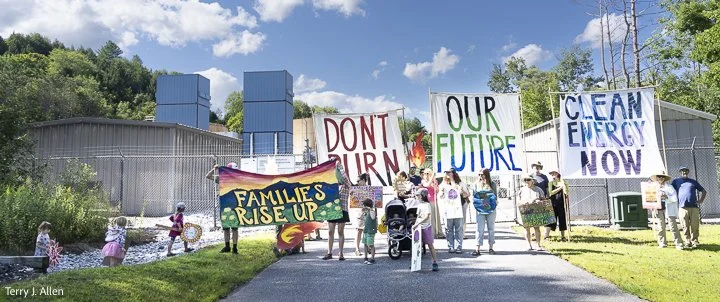
350Vermont volunteers protest outside the peaker plant in Berlin, Vt.
More about peaks and the electric grid
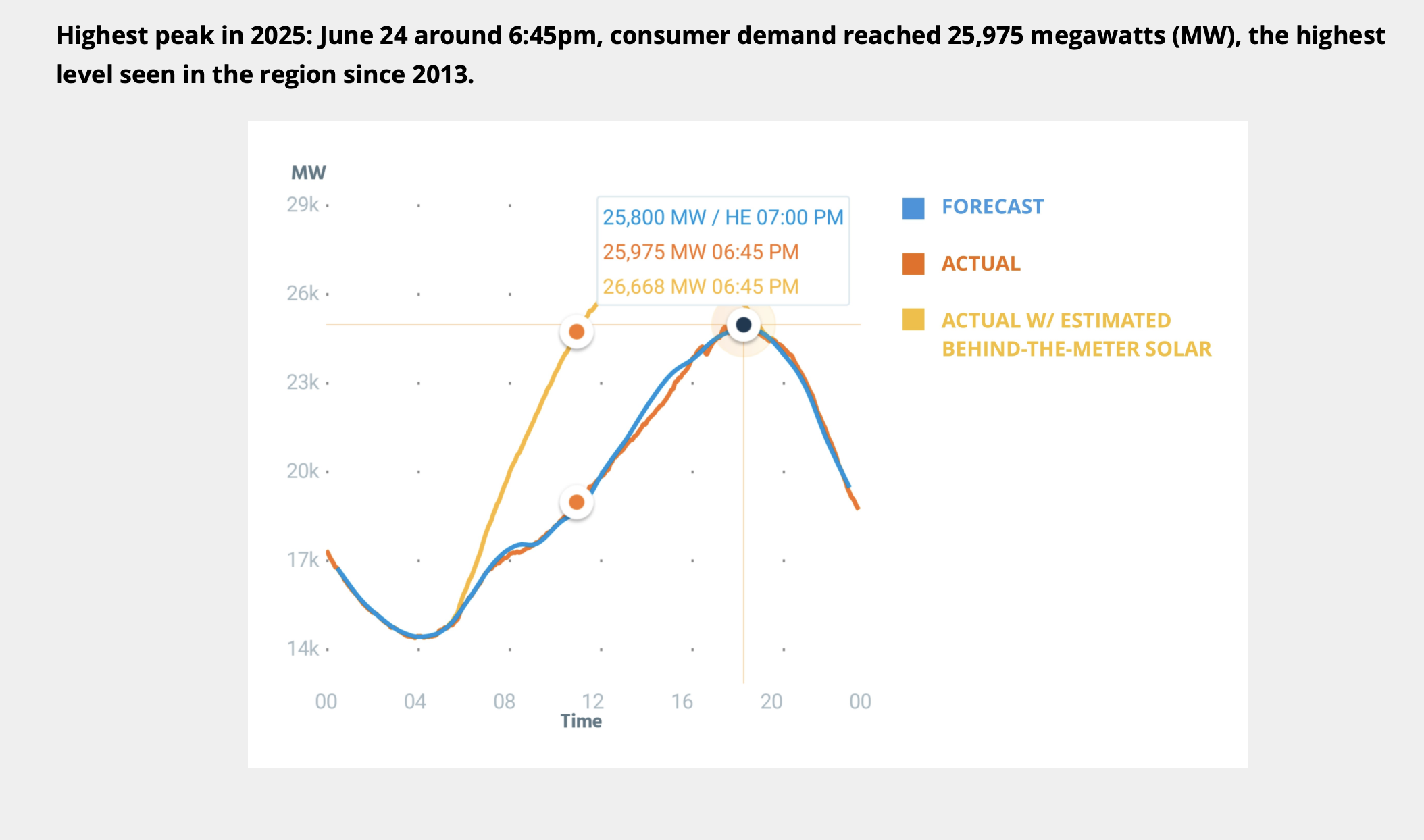
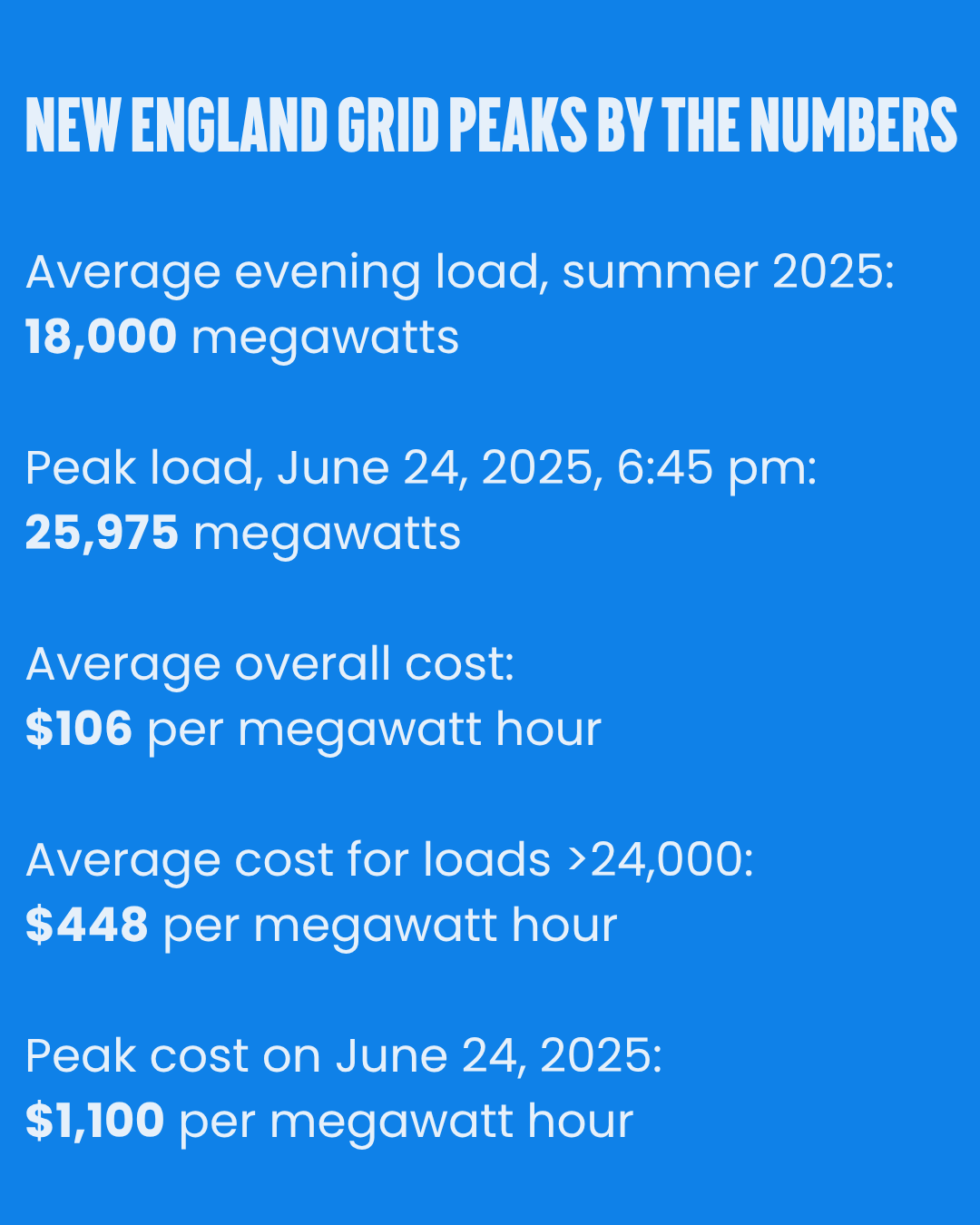
When demand is low, electricity costs are low: An average of $50 per megawatt hour. When demand is high, costs skyrocket to an average of $458 per megawatt hour. On June 25, 2025, last year’s highest peak, electricity cost our utilities more than $1,000 per megawatt hour. These peak costs determine our overall electricity rates.
In Vermont, an estimated 10-20% of our electric bills ($3.6 million annually) goes toward maintaining peaker plants, which run an average of only ten hours a year. New England as a whole spends $550 million on peaker plants. Imagine if those dollars could instead be invested in renewable energy solutions and energy conservation initiatives.
How to peakbust
You can sign up here to get alerts about peak electricity periods, and then make a plan to use less electricity during that time. Summertime peak hours are usually between 5 and 8:30 p.m., so meet your friends at the beach or the park for the evening, convene your neighbors for a backyard salad potluck, or go out to an event—whatever allows you to keep your home AC and stove and lights off for those few hours!
One final, essential step: Report your conservation! Recording our peakbusting efforts allows us to show our collective impact and send a powerful message to our utilities to do their part: invest in clean, affordable, renewable energy solutions instead of costly, dirty peaker plants.
Visit 350vt.org/peakbusters for more info.